In a world overflowing with complexity, noise, and ceaseless innovation, it seems counterintuitive that simple ideas have the power to move us the most. Yet time and again, simple truths — the ones that cut through jargon and complication – leave the deepest imprint on how we think, decide, and act.
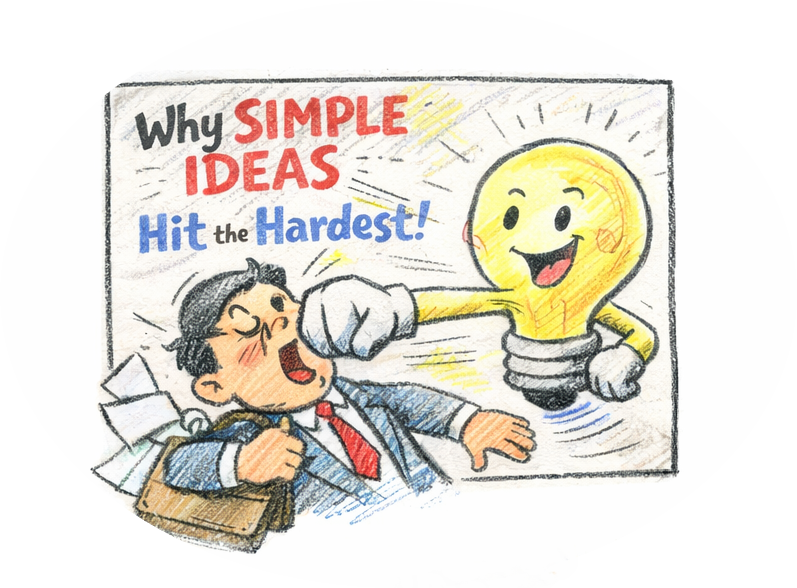
Why is that?
Why do certain ideas stop us mid-scroll, make us pause for a moment, or linger quietly in our minds long after we’ve heard them?
Sometimes it’s a sentence we hear in passing, a line in a book, or a piece of advice someone gives us years before we realise how true it was.
More often than not, the reason is their simplicity.
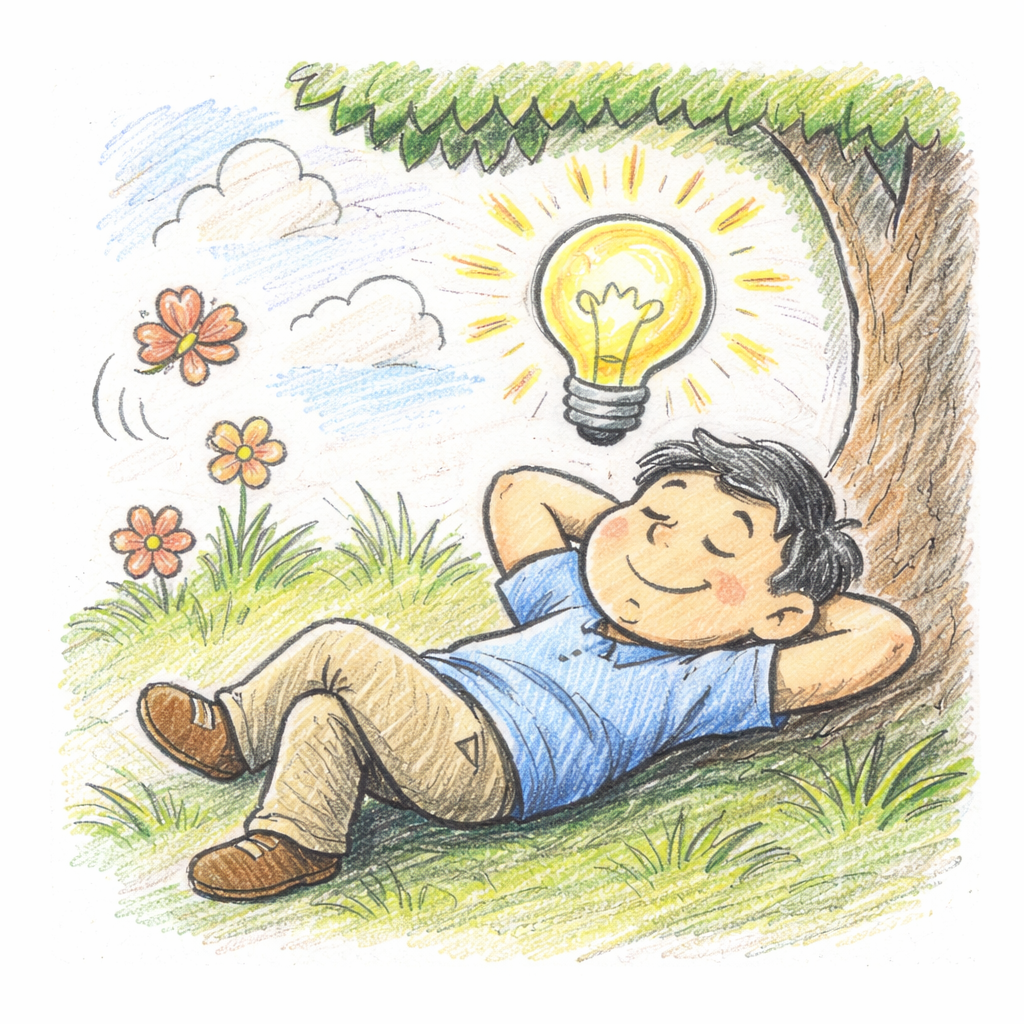
Simplicity Meets the Mind at Rest
Good decisions are rarely born of complexity. They are born of clarity.
The human mind prefers clarity. Complexity demands effort; simplicity offers recognition. When an idea is simple enough, it doesn’t feel new. It feels familiar – like something we already knew but had never quite put into words.
A simple idea does not force its way into our attention. It arrives quietly and settles in, as though it had been waiting there all along.
Understanding that feels ‘immediate’, is often mistaken for being shallow. In reality, the opposite is usually true. What appears effortless is often the result of careful thinking and patient refinement.
Complication is easy. Simplicity takes restraint.
We tend to admire complexity. It looks intelligent. It sounds sophisticated. It reassures us that something serious and rigorous is happening.
Yet the ideas that stay with us – the ones that quietly shape how we think and behave – are rarely the most elaborate ones. They are the clearest. When several explanations are possible, the one that requires the fewest assumptions is usually the best place to start. Not because the world is always simple, but because clarity often reveals what complexity hides.
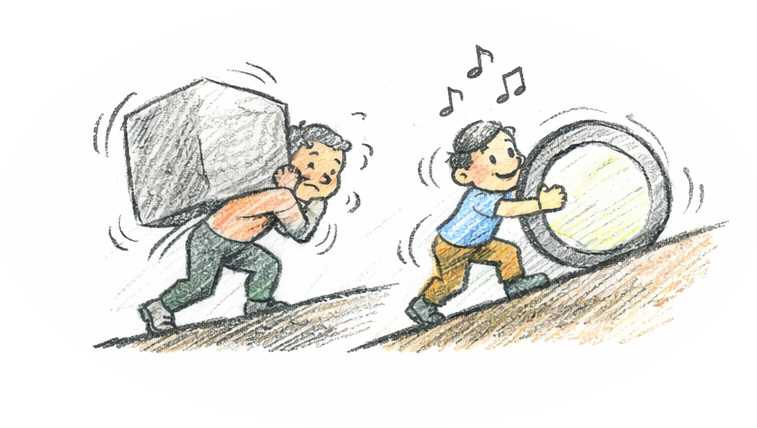 Part of the reason we gravitate toward complexity is that it signals effort. When something sounds complicated, we assume it must also be profound. Simplicity can feel suspicious by comparison – almost as if something important has been left out. But the opposite is often true. Simplicity is usually what remains after the unnecessary has been removed.
Complex ideas travel with explanation. Simple ones move more freely. They are easier to remember, easier to share, and easier to apply when the moment actually demands a decision.
“Be kind.”
“Less is more.”
“Clarity before certainty.”
These are not elaborate frameworks. They are anchors. And in moments of uncertainty, anchors matter more than maps.
Clarity also changes how we act. Complex reasoning can impress, but it often slows us down. When an idea is understood immediately, there is less room for rationalization – which is where many poor decisions quietly begin.This reveals something slightly uncomfortable about simple ideas: they expose responsibility.
When a principle is clear, it becomes usable. And once it becomes usable, it quietly expects something of us. The distance between evaluation and action shrinks. There is no theory left to interpret, no framework to hide behind – and little room for avoidance, jargon, or endless analysis. You understand it, and the next step is yours. The decision becomes personal.
And yet we often mistrust simplicity. Part of us suspects that something important must have been left out. After all, meaningful problems should come with complicated answers.
But more often than not, complexity clouds judgment rather than improving it. The real challenge is rarely understanding what matters. It is having the discipline to ignore what doesn’t.
In decision-making, simplicity is not naivete. It is focus. It is the ability to strip away the nonessential until only the determining factors remain.
The ideas that guide sound judgment are rarely the cleverest. They are the clearest — the kind that can be remembered in a moment and applied when it counts.
In a world crowded with noise, simplicity is not reduction. It is precision.
And the ideas that endure are the ones sharp enough to be understood immediately, yet deep enough to stay with us long after.
Because once something becomes truly clear, it leaves us with a quiet, persistent question.
Not about the idea – about us!
Now that you see it clearly, what will you do?