It is the peculiar habit of mankind to ruin perfectly good inventions by using them too often. Take mainstream media, for instance. Once a noble instrument of enlightenment, it is now chiefly employed to dazzle the public into confusion. What began as a source of news and information has, through overuse, cutthroat competition, and corruption, been reduced to a tool of government propaganda and mindless sensationalism. Language, I regret to inform you, has suffered a similar fate.
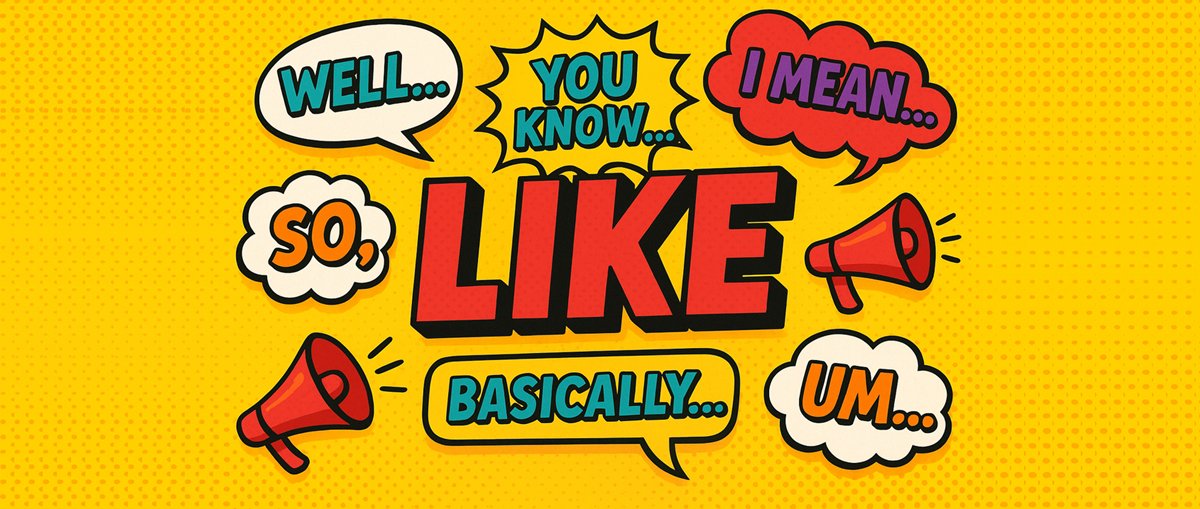
There was a time – a gentler, nobler age – when people only said “like” if they actually liked something. “I like jam,” they would say, and everyone was satisfied. Nobody thought they meant, “I, like, sort of enjoy jam, but not in a weird way, you know?” Simplicity itself. But alas, progress marched on, and the poor word has since been pressed into more jobs than a scullery maid.
Somewhere between Shakespeare and social media, English caught a mild fever, sneezed, and out came “like.” Since then, the poor word has been made to work double shifts – serving as verb, preposition, quotation mark, emotional cushion, and occasionally, sound effect. Nowadays, “like” does everything. It begins sentences, fills silences, bridges gaps in thought, and – on particularly busy days – even introduces entire imaginary dialogues:
The word is no longer a mere word. It’s a sort of conversational Swiss Army knife, useful for all purposes but ideal for none. One suspects it began innocently enough – a nervous pause here, a hesitation there. A person, searching for the perfect expression, reached into their vocabulary and found nothing, absolutely nothing, except “like.” They deployed it. It worked. The disease spread. Soon the whole population was sprinkling “like” over their speech as if it were seasoning on a badly cooked thought.
I first became aware of its epidemic proportions on a Sunday morning when my friends Shubham and Tasneem and I were engaged in that highest form of human endeavour – ordering breakfast. It was Tasneem who first noticed the girl at the next table negotiating her coffee order with such heavy reliance on “like” that one might’ve thought it was the currency. Shubham, ever the philosopher, declared that “like” was a symbol of equality. I, on the other hand, saw it as civilization's slow descent into grammatical anarchy.
After an hour of such discussion – and several reminders from the waiter that we’d been nursing the same cappuccinos since sunrise – I decided the world needed a play. Not a serious play, mind you. Heaven forbid. We have too many of those. The world needed a gentle reminder that its madness could be amusing if only one leaned back far enough.
Thus, was born Three People and a Word – a modest attempt to capture one of modern life’s great absurdities: our growing inability to finish a sentence without linguistic scaffolding. I offer it not as a sermon, but as a mirror – a slightly warped, cafe-stained mirror – in which we might see our reflection and laugh, perhaps nervously, perhaps fondly.
If, after the performance, one person says, “I shall never say ‘like’ again,” I shall feel I have failed completely – for language is a living thing, and one mustn’t stop it from misbehaving. If, however, you leave the theatre whispering, “It’s, like, brilliant,” then I shall know the infection is complete – and the play, a roaring success.
Three People and a Word
A Small Play in One Coffee and Several Likes
DISCLAIMER: At the request of those involved, the names have not been changed – they deserve the embarrassment. Out of sheer honesty, everything else is a lie.
(Hope you enjoy my first attempt at writing a play.)
SETTING: A cafe somewhere in modern India. A lazy Sunday morning. Sunlight, the smell of coffee, and the faint despair of people trying to sound clever.
CAST OF CHARACTERS
AJAY – A man of keen observations and mild indignations. Believes civilization peaked a couple of decades before he was born.
TASNEEM – His wife. Possesses equal measures of grace, irony, and good sense. Her eyebrow alone can silence revolutions. She is confident in all the wrong things (especially driving).
SHUBHAM – Their friend. Philosophical by accident and defensive by nature.
WAITER – Innocent. Casual herald of linguistic decay.
THE PLAY
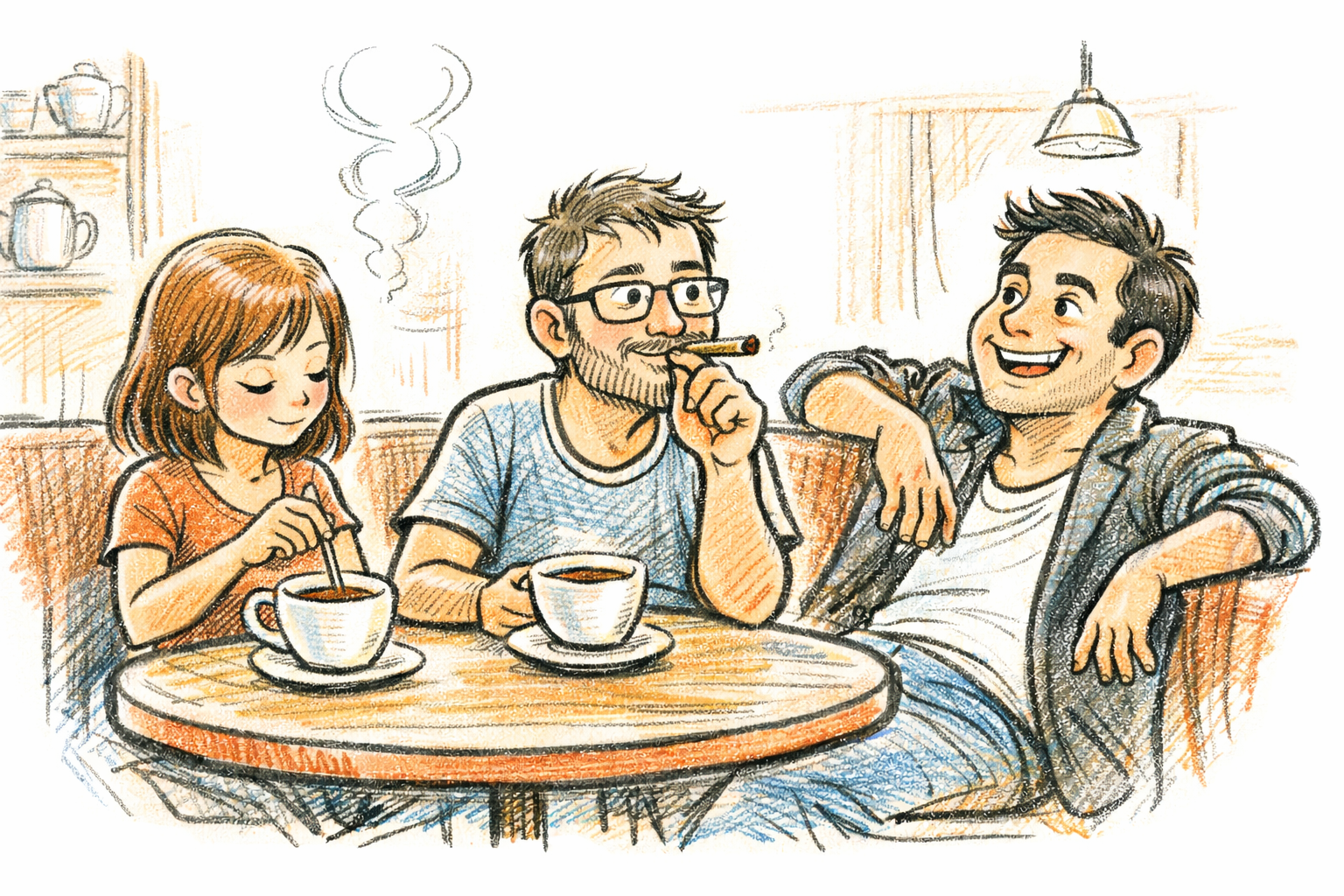
TASNEEM (stirring her cappuccino with great moral seriousness): You know, I’ve been observing people lately – and by “observing,” I mean “eavesdropping,” which is essentially the same thing – and I’ve discovered that humanity has stopped speaking English. We now speak... “like-ish.”
SHUBHAM (leaning back, philosopher by default): Evolution, my friend. Natural selection. The fittest filler survives. “Like” is basically the cockroach of conversation.
AJAY: And you’re complaining? You use “basically” as if you earn commission on it.
TASNEEM: That’s different. “Basically” has dignity. “Like” just… loiters – unemployed, unwashed, and uninvited.
SHUBHAM: Rubbish. “Like” is democratic – the great equaliser of speech.
(He counts on his fingers.) Teenagers, influencers, even the ‘famous wives of Bollywood’ – everyone uses it. It’s verbal socialism. I plan to slip it into my reporting, between adjectives: “The government is, like, considering options.” See? It’s the glue that binds society.
TASNEEM: It’s the glue that gums up the works, you mean. I heard a girl order coffee just now: “Can I get, like, a cappuccino, but, like, soy or almond milk, but, like, hot-ish but not, like, too hot?”
AJAY: Exactly! It’s verbal dandruff. Nobody knows it’s there until it’s everywhere.
SHUBHAM: You two are purists. It’s charming – in a doomed, museum-exhibit sort of way. Language changes. Your ‘basically’ is a case in point, and it is just as bad.
TASNEEM: I’d take “basically” any day. It sounds noble, purposeful – even respectable. “Like” sounds like it came in flip-flops.
SHUBHAM: But admit it – sometimes it’s useful. For example, when you’re talking about Tasneem’s driving. You can’t just say, “It was terrifying.” You must say, “It was, like, terrifying.” The “like” saves you from libel.
TASNEEM (offended): Excuse me! My driving is like amazing. It’s a metaphor for freedom.
SHUBHAM: Ha! See, that’s exactly what I mean – like gives us space to breathe. To think. It’s civilization’s pause button.
AJAY: Civilisation didn’t need a pause button until civilisation started talking this much.
(A silence. They all sip.
A nearby table erupts in laughter: “ And I was, like, ‘no way,’ and he was, like, ‘way!’ ”)
TASNEEM (quietly, in mock horror): It’s spreading.
SHUBHAM: Maybe they’re just… emotionally expressive.
AJAY: They’re verbally contagious.
TASNEEM: Soon it’ll creep into the newspapers. “The minister was, like, confident.”
(A waiter arrives with the bill.)
WAITER (deadpan): So, like, shall I split it?
(Beat. Utter silence.)
AJAY: We’ve lost him too.
TASNEEM: Poor fellow. Another victim of the filler plague.
SHUBHAM (sighing dramatically): It’s, like, everywhere, man.
(They all stare at him. Shubham freezes mid-sip, guilty.)
AJAY: And thus the contagion claims its final host.
(Curtain falls. Laughter, coffee steam, and the faint sound of someone saying “like” in the distance.)
It is comforting, in a tragic sort of way, to see that each age produces its own verbal nervous twitch – our humble contribution to the great human tradition of talking while thinking.
Still, there’s a certain beauty to it. One must admire how “like” manages to sound both confident and confused, precise and utterly meaningless, all at once. It’s a word for our times – adaptable, anxious, and permanently in search of a sentence to belong to.
And so, I say: let us not condemn the users of “like.” Let us instead marvel at them – brave explorers of the pauses between thoughts. They are, like, the poets of hesitation.